The Smallest Dinosaurs That Ever Lived
When people think about dinosaurs, they usually imagine enormous creatures such as Tyrannosaurus rex, Brachiosaurus, and Argentinosaurus. These animals were famous for their powerful bodies, sharp teeth, or incredible size. But did you know that some dinosaurs were surprisingly small?
Not every dinosaur was a giant. Some were small, lightweight animals that could move quickly through ancient forests and search for insects, small animals, or other food. A few dinosaurs were comparable in size to modern birds, making them very different from the dinosaurs we often see in movies.
In this article, we will explore some of the smallest dinosaurs that ever lived, learn about their size, discover where they lived, and understand why these tiny creatures are important to dinosaur science.
1. What Was the Smallest Dinosaur?
Identifying the smallest dinosaur is not as simple as it sounds. Many small dinosaur fossils are incomplete, and scientists sometimes disagree about whether a fossil belongs to a dinosaur or a close relative.
Another important point is that modern birds are living dinosaurs. Some modern birds are extremely small, but when people ask about the smallest dinosaurs, they usually mean extinct, non-avian dinosaurs.
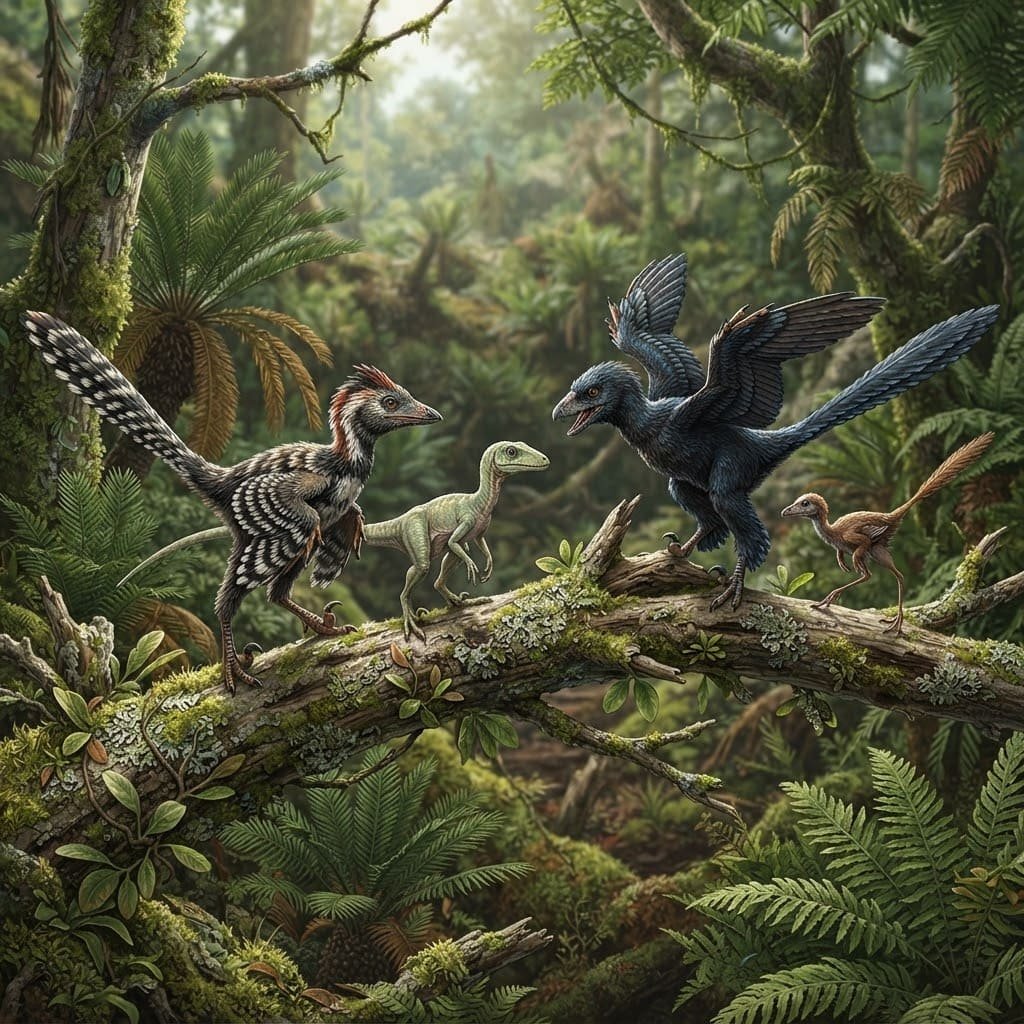
Among the smallest known non-avian dinosaurs are tiny bird-like species such as Anchiornis and Microraptor, although their estimated sizes vary. Other small dinosaurs were lightweight predators that lived during the Jurassic and Cretaceous periods.
2. Compsognathus: A Dinosaur About the Size of a Chicken
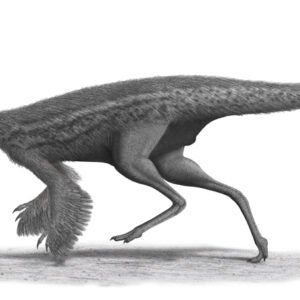
Compsognathus is one of the best-known small dinosaurs. It lived during the Late Jurassic Period, approximately 150 million years ago, in what is now Europe.
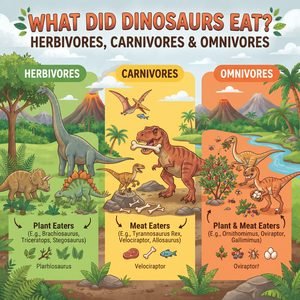
Unlike giant plant-eating dinosaurs, Compsognathus had a small body, a long tail, and slender legs. It was a carnivore and probably hunted small animals, including lizards and other tiny creatures.
Some specimens suggest that it reached around one metre in length, including its tail. Its lightweight body likely helped it move quickly.
Compsognathus is a great example of how dinosaurs could survive without being enormous.
3. Microraptor: A Tiny Dinosaur With Four Wings
Microraptor was a small feathered dinosaur that lived in what is now China during the Early Cretaceous Period, around 120 million years ago.
It is especially famous because fossils show long feathers on both its forelimbs and hindlimbs. This gave it a distinctive four-winged appearance.
Microraptor was roughly the size of a crow, although estimates vary by specimen. Scientists have studied its feathers and skeleton to understand how it moved and whether it could glide between trees.
Its fossils provide important evidence about the evolution of feathers and the early development of flight-related adaptations.
4. Anchiornis: A Small, Feathered Dinosaur
Anchiornis was another small feathered dinosaur discovered in China. It lived during the Late Jurassic Period, roughly 160 million years ago.
This animal was about the size of a small bird, with long feathers on its arms and legs. Fossil evidence has helped scientists investigate the early evolution of feathers and the relationship between dinosaurs and birds.
Some exceptionally preserved fossils have even provided clues about the colours of its feathers.
Anchiornis shows that feathered dinosaurs existed long before modern birds evolved into the many forms we see today.
5. Parvicursor: One of the Tiny Dinosaurs
Parvicursor was a very small dinosaur that lived during the Late Cretaceous Period in what is now Mongolia.
It belonged to a group of small dinosaurs known as alvarezsaurids. Members of this group often had short arms and specialized hands.
Parvicursor was tiny compared with most other dinosaurs, although its exact adult size is difficult to determine because the fossil record is limited.
Scientists think some alvarezsaurids may have used their specialized limbs to access insects, possibly including ants or termites.
6. Epidexipteryx: A Small Dinosaur With Unusual Feathers
Epidexipteryx lived in what is now China during the Middle to Late Jurassic, around 160 million years ago.
It was a small, bird-like dinosaur with unusual elongated feathers near the end of its tail. Unlike the flight feathers of modern birds, these decorative feathers were not adapted for powered flight.
Its discovery helped scientists understand how different feather types evolved and how feathers may have served purposes beyond flying.
Epidexipteryx reminds us that feathers developed in a variety of forms before modern birds appeared.
7. Mahakala: A Small Relative of Famous Predators
Mahakala was a small theropod dinosaur discovered in Mongolia. It lived during the Late Cretaceous Period, around 80 million years ago.
It belonged to the broader group of small, agile theropods related to the evolutionary history of birds.
Mahakala was much smaller than famous predators such as Tyrannosaurus rex. Its fossil remains have helped researchers investigate how small-bodied dinosaurs evolved and how different groups of theropods were related.
Although its remains are incomplete, Mahakala is an important species for understanding dinosaur evolution.
8. Why Were Some Dinosaurs So Small?
Small dinosaurs had several potential advantages. Their size may have helped them survive in environments where larger animals needed much more food.
Here are a few possible benefits of being small:
- Less food required: Smaller bodies generally require less total food than enormous animals.
- Quick movement: Lightweight bodies can make rapid movement easier, depending on body shape and anatomy.
- Access to different habitats: Small animals may be able to use narrow spaces, dense vegetation, and other areas that larger animals cannot easily reach.
- Different food sources: Some small dinosaurs could feed on insects, lizards, and other small animals that larger predators might ignore.
These advantages did not guarantee survival, but they helped small dinosaurs occupy ecological roles different from those of giant species.
9. Were Small Dinosaurs Related to Birds?
Yes. Many small theropod dinosaurs were closely related to birds, and modern birds evolved from theropod dinosaurs.
Fossils of feathered dinosaurs show that feathers were present in several dinosaur groups. Over evolutionary time, certain feathered theropods developed adaptations associated with flight.
However, not every small feathered dinosaur could fly. Some may have glided, while others probably used feathers mainly for insulation, display, or other functions.
The relationship between dinosaurs and birds is one of the most important discoveries in modern paleontology.
10. How Do Scientists Discover Tiny Dinosaurs?
Finding small dinosaur fossils can be challenging. Their bones are delicate and may break or become scattered before fossilization.
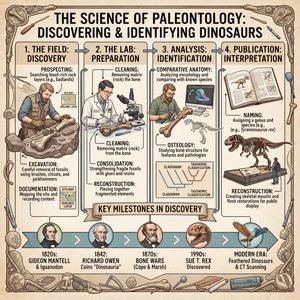
Paleontologists search sedimentary rocks for bones, teeth, and other fossil evidence. When they discover a specimen, they carefully excavate and document it.
Researchers then examine the fossils using methods such as:
- Comparing bones with other dinosaur specimens
- Studying teeth and limb structures
- Using microscopes and imaging technology
- Creating digital models of skeletons
- Estimating body size from preserved bones
Sometimes, exceptionally preserved fossils reveal feathers, skin impressions, or other details that are rarely found.
New discoveries may change what scientists know about the smallest dinosaurs, so the search is far from over.
Conclusion
The smallest dinosaurs were just as fascinating as the giant species that often dominate our imagination. From the feathered Microraptor and Anchiornis to the tiny Compsognathus, these animals show how diverse dinosaurs really were.
Their small bodies, specialized features, and evolutionary relationships help scientists understand how dinosaurs adapted to different environments and how birds eventually evolved.
Although many dinosaur species were enormous, others survived with very different strategies. Studying these smaller animals gives us a more complete picture of prehistoric life.
Keep exploring Dino Facts Hub for more fascinating articles about dinosaur species, fossils, prehistoric history, and the incredible creatures that once lived on Earth.