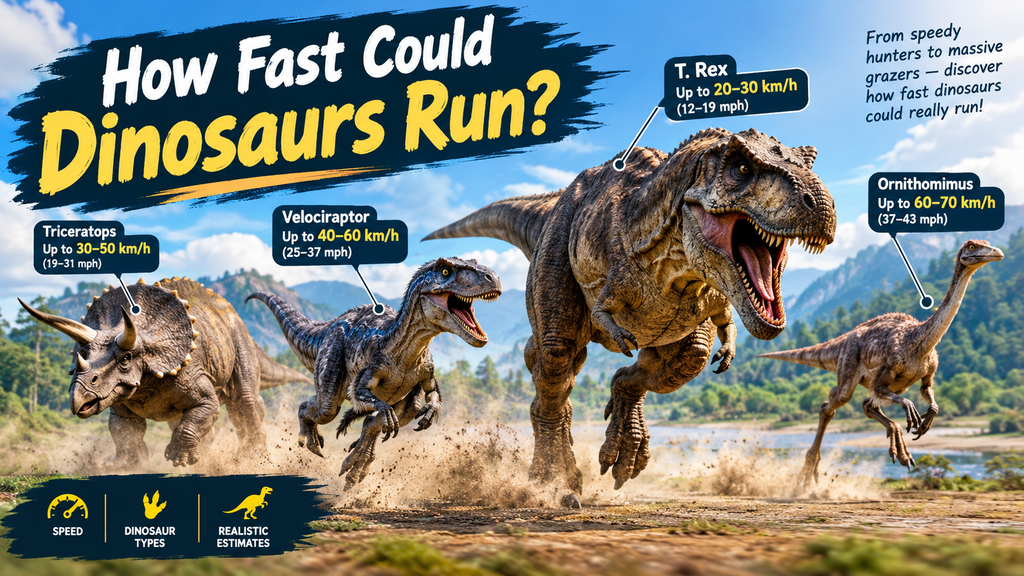
Few questions about prehistoric life spark as much curiosity as this one: how fast could dinosaurs run? Movies often show dinosaurs chasing jeeps at highway speeds, but the real answer is more interesting, and a lot more nuanced. Dinosaurs ranged from chicken-sized sprinters to 70-ton giants, so there is no single “dinosaur speed.” Let’s look at how scientists work it out and which dinosaurs were likely the fastest.
How Do Scientists Estimate Dinosaur Speed?
We can’t clock a dinosaur with a stopwatch, so paleontologists rely on several lines of evidence:
- Fossil trackways: Fossilized footprints show the length of a dinosaur’s stride. Using a formula first developed by biologist R. McNeill Alexander, researchers can estimate speed from stride length and leg length.
- Leg anatomy: Long, slender lower legs, compared with the thigh, are typical of fast runners today, such as ostriches and horses. Short, heavy legs suggest slower movement.
- Biomechanical modeling: Computer models estimate muscle mass, bone strength, and body weight to work out what a dinosaur’s body could safely handle.
- Comparison with living animals: Birds are living dinosaurs, so animals like ostriches and emus provide useful comparisons.
Every one of these methods involves assumptions, so all dinosaur speeds are estimates, not exact measurements.
The Fastest Dinosaurs
The speed champions were most likely small to medium-sized, lightly built, two-legged dinosaurs.
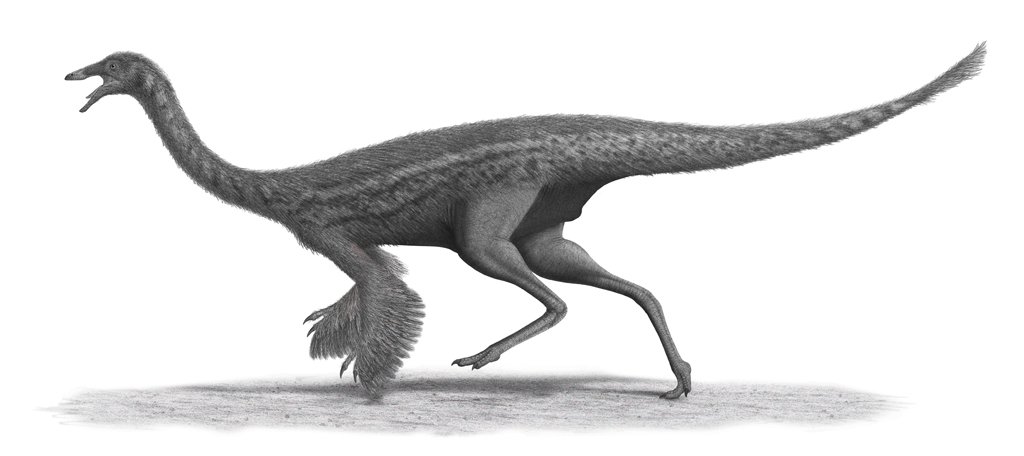
Ornithomimids (“Ostrich Mimics”)
Dinosaurs such as Gallimimus and Struthiomimus had long legs, light bodies, and long tails for balance, much like modern ostriches. Their anatomy points to excellent running ability, and popular estimates put their top speed at around 50 km/h (about 30 mph). Their true top speed, however, is unknown. These figures are best treated as informed estimates rather than certainties, since the fossil record is incomplete.
Small Raptors and Other Light Theropods
Small predators like Velociraptor and Deinonychus were agile and quick. They were probably built for fast bursts and sharp turns rather than long-distance running. Their sickle-shaped claws and stiff tails suggest a hunting style that relied on agility as much as raw speed.
How Fast Could Tyrannosaurus rex Run?
This is the big question. Tyrannosaurus rex weighed several tons, and that much body mass makes high speed very difficult, since large bones and muscles are under enormous stress at a fast run.
Estimates vary widely between studies. Some biomechanical models suggest a top speed of around 18 km/h (11 mph), while others allow for up to about 29 km/h (18 mph). Many researchers also think T. rex was an excellent walker, covering ground efficiently with long strides, which would be very useful for a predator and scavenger. The movie image of a T. rex outrunning a car is pure fiction, but a healthy adult human would still not want to test their luck.
What About the Giants?
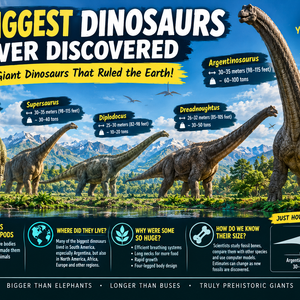
Huge plant-eaters such as Brachiosaurus, Diplodocus, and Argentinosaurus were built like living pillars, with thick, column-like legs. Trackway evidence suggests sauropods generally moved at a walking pace, roughly 3 to 8 km/h (2 to 5 mph). With their size as their main defense, they didn’t need to be fast.
Armored dinosaurs like Ankylosaurus and horned dinosaurs like Triceratops fall somewhere in between. Triceratops may have been capable of a moderate, powerful run, but nothing like a sprinter’s pace.
Dinosaur Speed Compared to Animals Today
| Animal | Approximate Top Speed |
|---|---|
| Ostrich (living dinosaur relative) | ~70 km/h (43 mph) |
| Fastest human sprinters | ~45 km/h (28 mph) |
| Gallimimus (estimated) | ~50 km/h (30 mph) |
| Tyrannosaurus rex (estimated range) | ~18 to 29 km/h (11 to 18 mph) |
| Sauropods (walking pace) | ~3 to 8 km/h (2 to 5 mph) |
The comparison shows that the very fastest dinosaurs were probably as quick as an elite human sprinter, and perhaps faster, while the largest ones moved at a stroll.
Why Speed Estimates Keep Changing
Dinosaur speed is an active area of research. New fossil discoveries, improved computer models, and better understanding of muscle and bone structure keep refining the numbers. A newly found trackway or a more complete skeleton can change what we think about a species. That’s part of what makes paleontology so exciting.
Key Takeaways
- Dinosaur speed depended heavily on body size, leg proportions, and build.
- Small, long-legged theropods like ostrich mimics were likely the fastest.
- T. rex was probably much slower than movies suggest, though still powerful.
- Giant sauropods moved at a walking pace.
- All speeds are scientific estimates and may be revised as new evidence emerges.
Frequently Asked Questions
What was the fastest dinosaur?
Ostrich-like dinosaurs such as Gallimimus are generally considered among the fastest, and popular estimates put them at around 50 km/h (30 mph), though their exact top speed is unknown.
Could a human outrun a T. rex?
Probably not for long. Estimates for T. rex range from about 18 to 29 km/h, which is within reach of a fast sprinter for a short distance, but this is far from a safe bet and the numbers are uncertain.
Did dinosaurs run faster than modern animals?
No evidence suggests dinosaurs were faster than the fastest living animals. Today’s ostriches and cheetahs likely outpace even the quickest dinosaurs.
Curious about more prehistoric facts? Explore our other articles in Dinosaur Facts & General Information to keep learning about the amazing creatures that once ruled the Earth.