
Dinosaurs vanished from Earth about 66 million years ago, long before any human could see one. So how do we know they existed at all, what they looked like, or what they were called? The answer is a fascinating story of curious naturalists, lucky discoveries, fierce rivalries, and ever-improving technology that stretches back centuries and is still unfolding today.
Before “Dinosaurs”: Early Fossil Finds
People have been finding giant fossil bones for thousands of years. Ancient communities often explained them with myths. In China, fossils were sometimes called “dragon bones” and ground up for traditional medicine. In Europe, huge bones were occasionally believed to belong to giants or legendary monsters.
One notable early record comes from 1677, when English naturalist Robert Plot described and illustrated a huge thigh bone found in Oxfordshire. He thought it might belong to a giant human or an elephant. Looking back, scholars believe it was part of what we now call Megalosaurus, although it wasn’t named until much later.
The 1800s: The First Dinosaurs Are Named
The early 19th century was the turning point. Geology was becoming a real science, and people were beginning to accept that Earth was extremely old and that many animals from the past were extinct.
Megalosaurus (1824)
English geologist and clergyman William Buckland described the jaw and other bones of a large fossil reptile from near Oxford. He named it Megalosaurus, meaning “great lizard.” It was the first dinosaur to be formally named and described in a scientific publication.
Iguanodon (1825)
Gideon Mantell, a doctor and fossil collector in Sussex, England, found large teeth that looked like those of a modern iguana, only far bigger. He named the animal Iguanodon, meaning “iguana tooth.” A popular story says his wife, Mary Ann, spotted the first teeth, although historians still debate the details. Mantell later described other early finds, including Hylaeosaurus, an armored dinosaur.
The Word “Dinosaur” (1842)
By the 1840s, three large, strange extinct reptiles had been described. British anatomist Richard Owen recognized that they shared special features, including a distinctive hip structure and upright limbs, and grouped them into a new category. In 1842 he coined the name Dinosauria, from Greek words meaning “terrible lizard.” Owen also promoted public interest in these animals, including through the famous Crystal Palace dinosaur sculptures that opened in London in 1854.
Dinosaurs Cross the Atlantic
The first dinosaur fossils in North America were fragments, but a major breakthrough came in 1858. In Haddonfield, New Jersey, a fossil collector uncovered a large partial skeleton, which anatomist Joseph Leidy described as Hadrosaurus. It was the most complete dinosaur skeleton found at that point, and it showed that at least some dinosaurs could walk on two legs, an idea very different from Owen’s four-legged, rhinoceros-like early reconstructions.
The Bone Wars: A Fossil-Hunting Feud
In the late 1800s, two American paleontologists, Edward Drinker Cope and Othniel Charles Marsh, became bitter rivals. Their competition, often called the “Bone Wars,” sent teams of fossil hunters across the American West, especially to sites in Colorado and Wyoming.
The rivalry was messy, with accusations of spying, bribery, and even destroying fossils to keep them from the other side. But it also produced a flood of discoveries. Between them, Cope and Marsh named well over a hundred new dinosaur species, including famous ones such as Allosaurus, Stegosaurus, Triceratops, Diplodocus, and Apatosaurus. Some of their names were later found to be duplicates, but the work transformed what the world knew about dinosaurs.
The Early 1900s: Expeditions and Famous Finds
- Tyrannosaurus rex (1905): Henry Fairfield Osborn of the American Museum of Natural History formally named the “tyrant lizard king,” based on fossils collected by Barnum Brown in Montana.
- Dinosaur National Monument: Fossil quarries in Utah and Colorado, opened in the early 1900s, revealed huge numbers of sauropod and other dinosaur bones.
- The Gobi Desert expeditions (1920s): Explorer Roy Chapman Andrews led expeditions to Mongolia that found the first confirmed dinosaur nests and eggs, along with Protoceratops and other new species.
- Spinosaurus (1912): German paleontologist Ernst Stromer described this giant sail-backed predator from Egypt, but the original fossils were destroyed during World War II, leaving scientists to rely on his notes and later discoveries.
The Dinosaur Renaissance
After a quieter period, dinosaur science exploded again in the late 1960s. In 1969, John Ostrom described Deinonychus, a lightly built, agile predator with a large sickle-shaped claw. Its skeleton looked very bird-like and suggested an active, energetic lifestyle. Ostrom and his student Robert Bakker helped revive the idea that birds evolved from dinosaurs and that many dinosaurs were far from slow and clumsy.
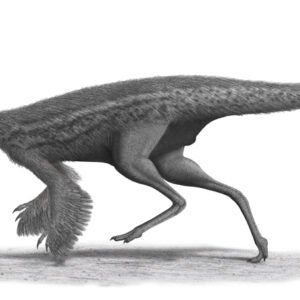
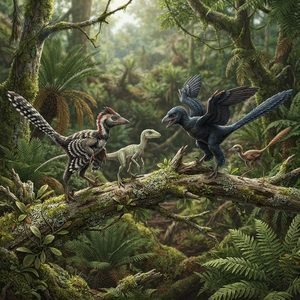
Then came another surprise. Starting in the mid-1990s, spectacular fossils from Liaoning Province in China revealed dinosaurs with feathers or feather-like coverings, such as Sinosauropteryx. These finds helped confirm the dinosaur-bird connection with direct fossil evidence.
How Scientists Actually Find and Identify Dinosaurs
Modern dinosaur discovery is a careful process combining fieldwork and laboratory science.
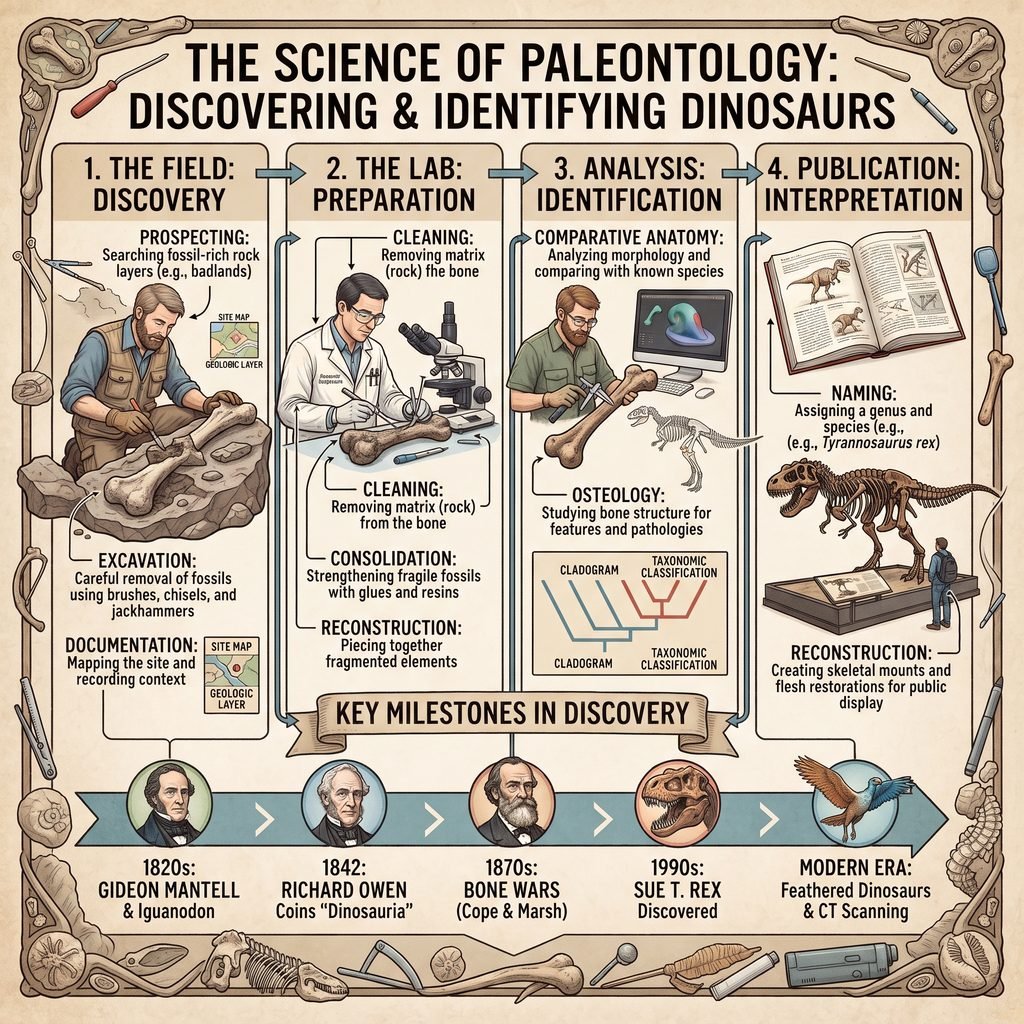
1. Prospecting
Paleontologists look in sedimentary rock formations of the right age, since dinosaurs lived only in the Mesozoic Era. Fossils are often first spotted as bone fragments weathering out of cliffs, hillsides, or badlands.
2. Excavation
Once a promising find is located, the team maps the site and removes the surrounding rock with tools ranging from jackhammers to dental picks and brushes. The position of each bone is recorded, because it can reveal how the animal died and was buried.
3. Plaster Jackets
Fragile fossils are wrapped in layers of plaster-soaked bandages, similar to a cast on a broken arm. These “jackets” protect the bones while they are transported to a museum or lab.
4. Preparation
In the lab, preparators carefully remove the remaining rock using small air-powered tools, needles, and sometimes chemicals. This painstaking work can take months or even years for a large skeleton.
5. Comparing and Naming
Scientists compare the bones with known species. If features such as the skull, teeth, or hip bones are different enough, the animal may be a new species. The researchers then publish a formal description in a scientific journal and give it a unique scientific name.
6. Classification
Paleontologists use a method called cladistics to work out where a new dinosaur fits on the family tree. They compare large sets of anatomical traits to see which species share a recent common ancestor. The long-standing division of dinosaurs into saurischians (“lizard-hipped”) and ornithischians (“bird-hipped”), proposed by Harry Seeley in 1887, is one of the most famous examples of such classification, although researchers still debate parts of the tree.
Modern Technology in Dinosaur Science
- CT scanning: Lets scientists look inside skulls and bones without damaging them, revealing details such as brain shape and inner-ear structure.
- Microscopic bone analysis: Thin slices of bone show how fast an animal grew and roughly how old it was when it died.
- 3D modeling and digital reconstruction: Helps researchers test how a dinosaur moved, ate, or supported its weight.
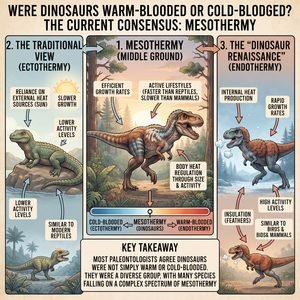
- Chemical analysis: Studies of isotopes and preserved molecules can give clues about diet, climate, and metabolism.
- Microscopes and pigment studies: Structures preserved in feathers have been used to infer the colors of some dinosaurs.
Why New Dinosaurs Are Still Being Discovered
Paleontologists name dozens of new dinosaur species every year. Remote regions in Argentina, China, Mongolia, Africa, and Antarctica continue to produce important finds. Each discovery is only a tiny snapshot of the past, because fossilization is rare. Most animals that ever lived left no fossils at all, so scientists believe many dinosaur species are still waiting to be found.
Quick Timeline of Dinosaur Discovery
- 1677: Robert Plot illustrates a giant thigh bone, later linked to Megalosaurus.
- 1824: William Buckland names Megalosaurus.
- 1825: Gideon Mantell names Iguanodon.
- 1842: Richard Owen coins the term “Dinosauria.”
- 1858: Hadrosaurus is described in North America.
- 1870s to 1890s: The Bone Wars between Cope and Marsh.
- 1905: Tyrannosaurus rex is named.
- 1969: Deinonychus sparks the Dinosaur Renaissance.
- 1990s: Feathered dinosaurs are found in China.
Frequently Asked Questions
Who discovered the first dinosaur?
There is no single answer, since people found fossils for centuries without understanding them. William Buckland gave the first formal scientific name to a dinosaur, Megalosaurus, in 1824, and Gideon Mantell named Iguanodon shortly after.
Who invented the word “dinosaur”?
Sir Richard Owen, a British anatomist, introduced the term “Dinosauria” in 1842.
How do scientists know how old a dinosaur fossil is?
They usually date the surrounding rock layers. Volcanic ash layers above and below a fossil can be dated using radiometric methods, which measure the decay of radioactive elements, giving a reliable age range.
How are dinosaurs named?
New species receive a Latin or Greek-based scientific name, often describing a feature of the animal, the place it was found, or a person to be honored. For example, Triceratops means “three-horned face.”
Are scientists still discovering new dinosaurs?
Yes. New species are described every year, and new technology keeps revealing details about familiar ones.
Final Thoughts
The discovery of dinosaurs is really a story about curiosity. From a few giant teeth and bones in English countryside to jacketed skeletons and high-tech scans today, each generation of scientists has built on the work of the last. And with so much of the planet still unexplored, the next great dinosaur discovery could be waiting in a remote desert or cliffside right now.